One evening a week (approximately September through May)
Courses Required:
Pattern Cutting, Math, Scaffold Building, Metal Cutting, Pattern and Blueprint Reading.
Scope of Work
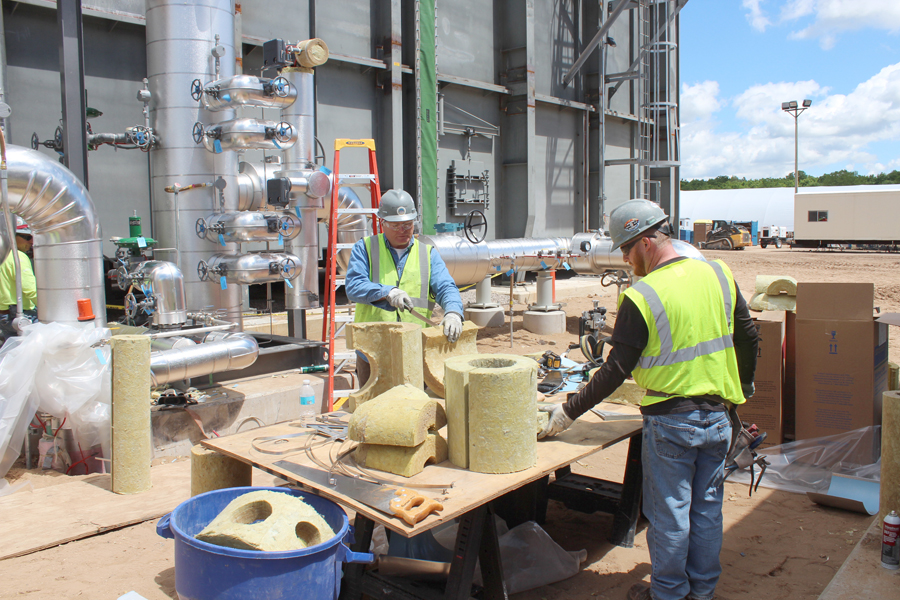
Heat and frost insulators apply insulation materials to plumbing, air-handling, heating, cooling and refrigeration systems; piping equipment and pressure vessels; and walls, floors and ceilings of buildings and other structures to prevent or reduce the passage of heat, cold, sound or fire.
Industrial field applies to all types of industries such as chemical process, pharmaceutical, and petrochemical. The commercial field includes hospitals, schools, and office buildings. Transportation includes the insulation of trucks, trailers, railroad cars and ships. The heat and frost insulation worker today works with many types of materials, such as fiberglass, cork, ceramic fiber and calcium silicate.
Working Conditions
The standard work week for heat and frost insulators is 40 hours (8 hours a day, 5 days a week). As with many careers in construction, there are peak periods that will require you to work overtime. The number of additional hours you work each week depends on the construction sector and region you work in, and will vary from one job to the next. If you work in maintenance, you may have to work in shifts. As a heat and frost insulator, you may work indoors or outdoors, usually with a team of other construction professionals. The job can be physically demanding – you may work on ladders or scaffolding and in confined areas.